Tesamorelin Dosage Chart: Vial Size to Syringe Units
By PeptCalc Research — Medically reviewed by David Mansour, MD — Last reviewed July 14, 2026
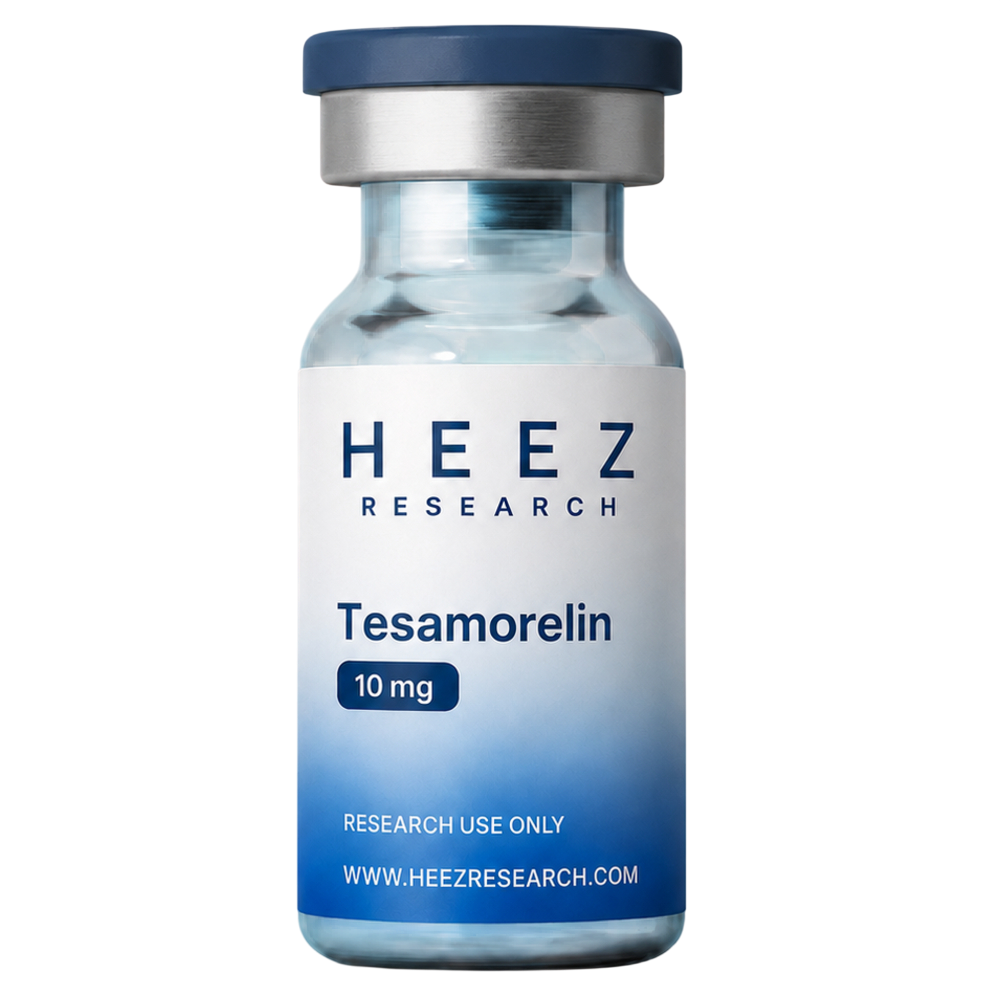
Tesamorelin is available at HEEZ Research
This calculator performs arithmetic on the numbers you enter. It is not medical advice, does not tell you what dose to take, and is not a substitute for guidance from a qualified clinician.
Tesamorelin ships as a lyophilized powder, so a vial's mg amount alone doesn't tell you how many units to draw. The water volume you add sets the concentration, and concentration is what turns a target dose into a syringe reading. This chart lays out that math for the vial sizes tesamorelin is commonly supplied in. It is a reference for research and educational purposes only and is not medical advice.
The reference ratio
A common reconstitution setup for tesamorelin scales the water to the vial size at 1 mL per 10 mg, which keeps the concentration at a constant 10 mg/mL regardless of vial size:
| Vial size | Water added | Concentration |
|---|---|---|
| 10 mg | 1 mL | 10 mg/mL |
| 20 mg | 2 mL | 10 mg/mL |
| 30 mg | 3 mL | 10 mg/mL |
Because the ratio is fixed, the units for a given dose stay the same across all three vial sizes — only the number of total doses each vial holds changes. For the reconstitution steps themselves, see the tesamorelin reconstitution calculator guide.
Dosage chart by target dose
Each row assumes the 10 mg/mL reference concentration above and shows the resulting draw on a U-100 insulin syringe (100 units per mL).
| Target dose | Volume | Units |
|---|---|---|
| 0.5 mg | 0.05 mL | 5 units |
| 1 mg | 0.1 mL | 10 units |
| 1.5 mg | 0.15 mL | 15 units |
| 2 mg | 0.2 mL | 20 units |
A 1 mg dose landing on an exact 10-unit mark is the reason 10 mg/mL is the common reference concentration for tesamorelin — it reads cleanly on any U-100 syringe barrel.
Reading the chart against a specific vial
Worked example. A 20 mg vial mixed with 2 mL of water sits at 10 mg/mL. A 1 mg dose from that vial is 1 ÷ 10 = 0.1 mL, or 10 units. The same 1 mg dose from a 10 mg vial mixed with 1 mL — also 10 mg/mL — is also 10 units. What changes is how many 1 mg doses each vial holds: the 10 mg vial holds 10, the 20 mg vial holds 20.
If you use a different water volume than the chart assumes, the concentration — and therefore the units per dose — changes. Use the peptide reconstitution calculator to solve for the exact units at any vial size, water volume, and target dose, or run its reverse mode to find a water volume that lands your dose on a round unit mark.
Common mistakes
- Assuming vial size sets the dose. It sets the total mg available across the vial. Water volume sets concentration, and concentration sets units per dose.
- Mixing up mg and mcg. Tesamorelin vials and doses are generally labeled in milligrams, not micrograms — a 1,000x difference if confused.
- Reusing a unit count across a different water volume. A unit count from this chart is only valid at the exact 10 mg/mL concentration it assumes. Changing the water volume changes every number downstream.
- Shaking instead of swirling during reconstitution. See how to reconstitute peptides for the mixing steps.
Use the calculator
Enter your tesamorelin vial size, water volume, and target dose into the peptide calculator for an exact unit count at any concentration — not just the round numbers in this chart. For the general vial-size math across other peptides, see peptide dosage chart by vial size; for the tesamorelin-specific reconstitution walkthrough, see the tesamorelin reconstitution calculator guide.
Frequently Asked Questions
- What ratio does a tesamorelin dosage chart usually assume?
- 1 mL of bacteriostatic water per 10 mg of tesamorelin, which holds the concentration at a constant 10 mg/mL across the common 10 mg, 20 mg, and 30 mg vial sizes. Any other ratio works mathematically; this one is common because it lands round doses on round syringe marks.
- How many units is a 1 mg tesamorelin dose?
- At 10 mg/mL, a 1 mg dose is 10 units on a U-100 insulin syringe. This holds for any vial size as long as the water volume was scaled to keep the concentration at 10 mg/mL.
- Does a bigger tesamorelin vial mean more units per dose?
- No. Vial size sets how many total doses the vial holds, not the units for a single draw. A 30 mg vial mixed with 3 mL of water is still 10 mg/mL — the same concentration, and the same units per dose, as a 10 mg vial mixed with 1 mL.
Ready to calculate? Use the free peptide reconstitution calculator →