
Retatrutide Vial Size Guide: 10 mg to 30 mg Vials
By PeptCalc Research — Medically reviewed by David Mansour, MD — Last reviewed July 27, 2026
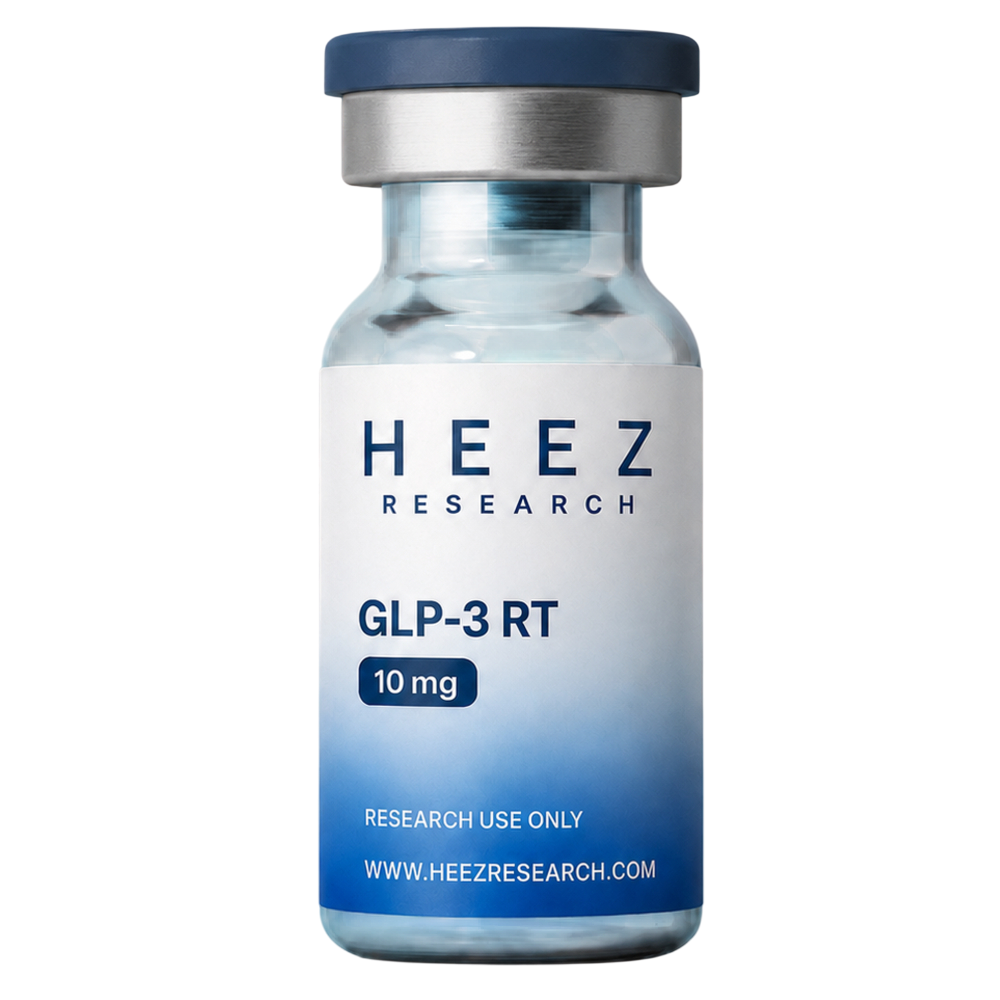
Retatrutide is available at HEEZ Research
This calculator performs arithmetic on the numbers you enter. It is not medical advice, does not tell you what dose to take, and is not a substitute for guidance from a qualified clinician.
A retatrutide vial size guide answers a different question than a dosage chart does: not "how many units for this draw," but "how much total retatrutide does this vial actually get me." Vial size is labeled in milligrams and fixed at manufacture, but what that number means day to day depends on the target dose and the water volume chosen at reconstitution. This guide walks through what vial size does and doesn't determine. It is written for research and educational purposes only and is not medical advice.
The common retatrutide vial sizes
Research suppliers typically list retatrutide in four sizes:
| Vial size | Typical use case |
|---|---|
| 10 mg | Shorter protocols, or lower per-draw doses |
| 15 mg | Mid-range supply without stepping up to 20 mg |
| 20 mg | Longer protocols at a moderate dose |
| 30 mg | Longer protocols, or fewer total vials needed |
All four are lyophilized powder, and all four follow the same reconstitution formula: concentration equals vial mass divided by the bacteriostatic water added. Nothing about that math changes between sizes — only the total mg in the vial differs.
Vial size sets total mg, not the size of one draw
This is the point most worth pulling out of any retatrutide dosage chart: vial size determines the total milligrams available across the whole vial, not how large a single dose is. A 3 mg draw is a 3 mg draw whether it comes from a 10 mg vial or a 30 mg vial. What changes is how many 3 mg draws the vial can supply before it runs out.
The formula:
Doses per vial = vial mass (mg) ÷ target dose (mg)
Worked example: doses per vial at a 3 mg target dose
Compare all four sizes against a fixed 3 mg target dose:
- 10 mg vial: 10 ÷ 3 = 3.3 doses
- 15 mg vial: 15 ÷ 3 = 5 doses
- 20 mg vial: 20 ÷ 3 = 6.7 doses
- 30 mg vial: 30 ÷ 3 = 10 doses
The 30 mg vial holds exactly three times the doses of the 10 mg vial, because 30 mg is exactly three times 10 mg and the target dose didn't change. This holds regardless of how much bacteriostatic water goes into any of the four — water volume changes the concentration and therefore the mL and unit reading per draw, but it never changes the total mg in the vial or the total number of doses that mg supports.
Water volume changes the draw, not the count
To see that water volume is a separate variable from vial size, reconstitute the same 20 mg vial two different ways and compare a 4 mg draw:
| Vial size | Water added | Concentration | 4 mg dose (units, U-100 syringe) | Doses per vial |
|---|---|---|---|---|
| 20 mg | 2 mL | 10 mg/mL | 40 units | 5 |
| 20 mg | 4 mL | 5 mg/mL | 80 units | 5 |
Step through the math for the second row. Concentration: 20 mg ÷ 4 mL = 5 mg/mL. Draw volume: 4 mg ÷ 5 mg/mL = 0.8 mL. Syringe units on a U-100 insulin syringe (1 mL = 100 units): 0.8 mL × 100 = 80 units.
Both rows come from the identical 20 mg vial and the identical 4 mg target dose, so both hold exactly 5 doses. Water volume only changed the unit reading on the syringe — 40 units versus 80 units — which is a question of what reads clearly on the barrel, not a question of total supply.
Matching vial size to protocol length
Because doses per vial follows directly from vial mass and target dose, sizing a vial (or vials) to a planned protocol is a matter of running the formula backward:
Total mg needed = number of planned doses × dose size (mg)
Worked example. A protocol calling for a 4 mg dose once weekly for twelve weeks needs 12 doses. Total mg required: 12 × 4 mg = 48 mg. A single 30 mg vial supplies 30 ÷ 4 = 7.5 doses — short of the full 12-week run. A 20 mg vial adds another 5 doses, for 12.5 doses combined, which covers the protocol with 0.5 doses of margin. Two 30 mg vials (60 mg total) would also cover it, with more mg left over than the 20 mg-plus-30 mg pairing.
Running this arithmetic before ordering is the point of a retatrutide vial size guide: it turns "which size should I buy" into a total-mg question with one clean answer instead of a guess.
Why the chart in a dosage guide won't answer this
A per-unit dosage chart, like the one covered in the retatrutide reconstitution calculator guide, shows what a single draw looks like in mL and syringe units at a given concentration — useful for the moment of actually drawing a dose. It doesn't show how many draws a vial has left, because that's a function of vial mass and dose size, not concentration. Both questions use the same underlying numbers but answer something different, which is why a vial size guide and a reconstitution guide stay separate rather than one long page.
Common mistakes
- Assuming a bigger vial means a bigger single dose. Vial size sets total supply, not draw size. The target dose sets draw size.
- Forgetting that water volume doesn't change total doses. It changes the mL and unit reading per draw, not how many draws the vial holds.
- Ordering by vial count instead of total mg. Three 10 mg vials and one 30 mg vial contain the same total retatrutide — plan around milligrams, not the number of boxes.
- Mixing up mg and mcg when comparing a vial label to a target dose (1 mg = 1,000 mcg). Retatrutide is generally labeled and dosed in milligrams.
Use the calculator
For the doses-per-vial and total-mg math above, a calculator isn't strictly necessary — it's simple division. Where a tool earns its keep is the per-draw conversion: enter your vial size, water volume, and target dose into the peptide calculator to get the exact mL and syringe units for that specific draw, or run reverse mode to find the water volume that lands a given dose on a whole unit mark. For the full mixing steps, see the retatrutide reconstitution calculator guide.
Frequently Asked Questions
- What retatrutide vial sizes are most common?
- 10 mg, 15 mg, 20 mg, and 30 mg are the sizes most often listed by research suppliers. All four follow the same reconstitution formula — vial mass divided by water volume — so the math scales the same way no matter which size is on hand.
- Does a bigger retatrutide vial mean a bigger dose?
- No. Vial size sets the total mg of retatrutide across the whole vial, not the size of any single draw. The target dose and the water volume used at reconstitution are what set the mL and syringe units for one draw.
- How many doses does a 20 mg retatrutide vial hold?
- Divide the vial's total mg by the target dose. A 20 mg vial dosed at 4 mg per draw holds 5 doses. A 10 mg vial at that same 4 mg dose holds 2.5 doses. Water volume doesn't change this count — it only changes the mL and unit reading of each draw.
- How do I choose between a 10 mg and a 30 mg retatrutide vial?
- Work backward from protocol length and per-draw dose. Multiply the number of planned doses by the dose size to get total mg needed, then pick the vial size, or combination of vials, that covers it.
Ready to calculate? Use the free peptide reconstitution calculator →