Retatrutide Dosage Titration Schedule: What Research Shows
By PeptCalc Research — Medically reviewed by David Mansour, MD — Last reviewed July 21, 2026
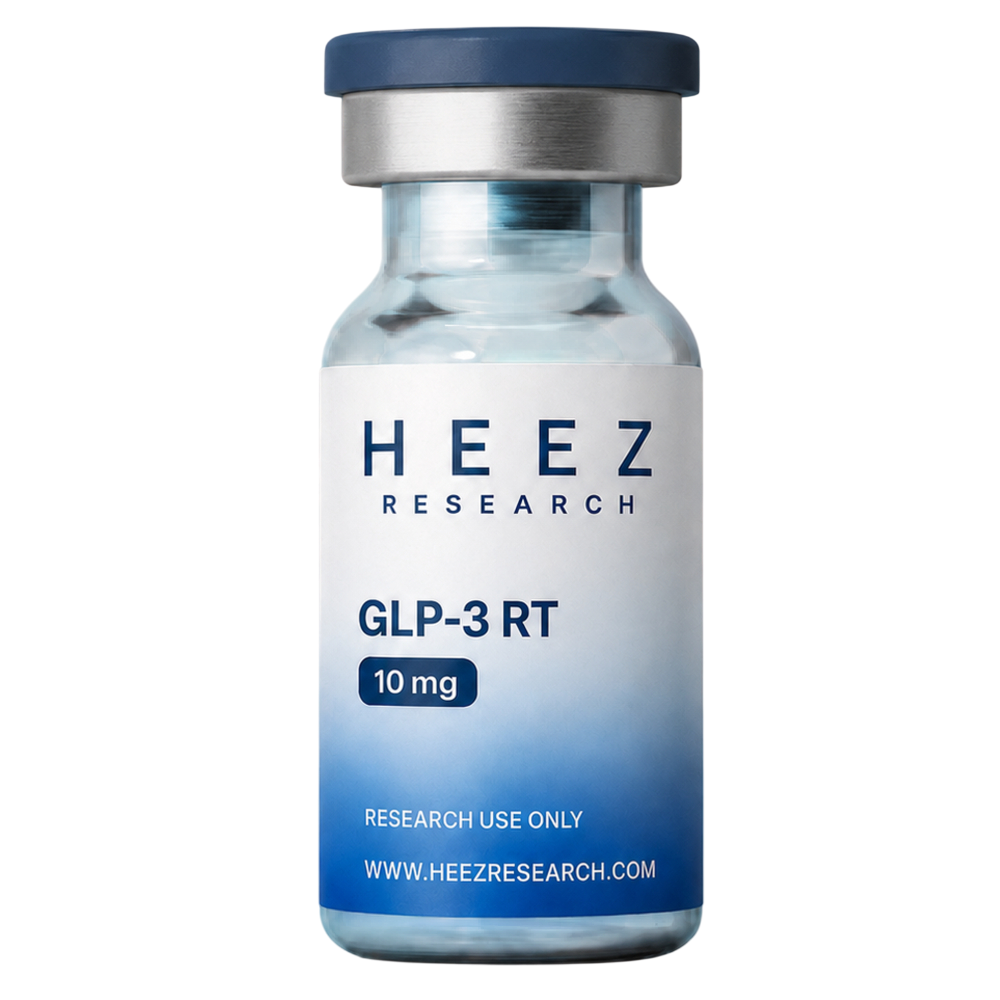
Retatrutide is available at HEEZ Research
This calculator performs arithmetic on the numbers you enter. It is not medical advice, does not tell you what dose to take, and is not a substitute for guidance from a qualified clinician.
Retatrutide research protocols, including its published Phase 2 human trial, generally do not start at the highest dose tested. They ramp up to it over a series of steps — a pattern usually called dose titration or dose escalation. This reference explains what a retatrutide dosage titration schedule means in research terms, what the published trial data shows about that design, and the reconstitution arithmetic behind converting each step into syringe units. It is written for research and educational purposes only and is not medical advice.
What "titration" means for a research peptide
Titration is the practice of increasing a dose in planned steps rather than jumping straight to a target amount. For compounds that can cause gastrointestinal side effects at higher doses — a pattern documented across the GLP-1/GIP/glucagon receptor agonist class retatrutide belongs to — researchers commonly use a lower starting dose and step it up over defined intervals so the body has time to adjust. The endpoint dose is the same either way; the schedule changes how it's reached, not the final number.
A schedule is only as useful as the log behind it. Each step needs a recorded date, a target dose, and the concentration it was drawn from, since a schedule with several steps spread over weeks is easy to lose track of without a written record. That record is also what makes a step reproducible — if a vial runs out partway through a schedule and a new one has to be mixed, the log is what confirms whether the new vial matches the concentration the old one held.
How the retatrutide Phase 2 trial approached dose escalation
The main published human data on retatrutide comes from a Phase 2 obesity trial (Jastreboff et al., New England Journal of Medicine, 2023). It randomized participants to placebo or one of several target doses of subcutaneous retatrutide, and the groups assigned to the higher target doses reached them through a gradual escalation schedule rather than starting there, which is the standard approach trial designers use to improve tolerability at higher doses. That is Phase 2, human-trial evidence — one step below the large, confirmatory Phase 3 trials that precede FDA approval. Retatrutide currently has no approved pharmaceutical formulation, and it remains under clinical investigation. Any dose figure discussed here describes what was tested in that trial, not a personal recommendation.
Here's how we see it: the step where a research dose most often goes wrong isn't drawing the syringe, it's the reconstitution math behind it. A titration schedule adds more of that math, not less — every step change is a fresh division and multiplication problem, and a schedule with five steps gives five chances to make the same error a single fixed dose only gives once.
The reconstitution math doesn't change across a titration schedule
Concentration is set once, when the vial is mixed: mass in the vial divided by the water volume added. It does not change step to step unless a new vial is reconstituted differently. What changes across a titration schedule is the target dose entered into that fixed concentration.
Worked example. A 20 mg retatrutide vial reconstituted with 2 mL of bacteriostatic water gives 20 ÷ 2 = 10 mg/mL. That concentration holds for every draw from that vial, at any step of a schedule, until it runs out or a new vial is mixed.
Worked example: units across common reference doses
Using the 10 mg/mL concentration above, common research reference doses convert to syringe units as follows on a U-100 insulin syringe (100 units per mL):
| Step dose | Volume | Units |
|---|---|---|
| 1 mg | 0.1 mL | 10 units |
| 2 mg | 0.2 mL | 20 units |
| 4 mg | 0.4 mL | 40 units |
| 8 mg | 0.8 mL | 80 units |
Because the formula is linear, each doubling of the dose doubles the units — 1 mg to 2 mg doubles 10 units to 20, 2 mg to 4 mg doubles 20 to 40, and so on. That predictable scaling only holds if the concentration is identical at every step.
That same 20 mg vial at 10 mg/mL holds 2 mL total, or 200 units. A schedule that steps from 10 units up to 80 units per draw pulls from that 200-unit supply faster as the dose rises, so tracking how many draws are left in a vial matters as much as tracking the current step's dose — running out mid-schedule means mixing a new vial, which is exactly the point where concentration has to be reconfirmed.
Why a new vial can break that predictability
The moment a titration schedule moves to a new vial mixed at a different water volume, the units-per-mg relationship resets. Take a 4 mg step dose:
| Vial setup | Concentration | Volume | Units |
|---|---|---|---|
| 20 mg vial + 2 mL water | 10 mg/mL | 0.4 mL | 40 units |
| 20 mg vial + 4 mL water | 5 mg/mL | 0.8 mL | 80 units |
Same 4 mg dose, same vial size — but doubling the water halves the concentration and doubles the units needed to deliver it. Neither setup is wrong; the mistake would be drawing 40 units from the second vial while assuming it still matches the first. For a titration schedule spanning multiple vials, verifying concentration at every refill matters more than at any single fixed dose, since a missed recalculation compounds across every step that follows it.
Common mistakes
- Assuming units scale the same way across a new vial. They only do if the new vial is reconstituted to the same concentration as the last one. Recheck, don't assume.
- Treating the trial's escalation schedule as a personal instruction. Published trial designs describe what was tested in a controlled research setting, not a protocol to copy. This guide describes what was studied, not what to do.
- Confusing mg and mcg mid-schedule. Retatrutide research doses are generally expressed in milligrams; 1 mg equals 1000 mcg, and misreading one for the other produces a thousand-fold error.
- Not labeling each vial with its concentration. A titration schedule that spans several vials needs each one clearly marked, especially if water volumes weren't identical across all of them.
Use the calculator
For each step of a titration schedule, enter the vial size, water volume, and that step's target dose into the peptide calculator to get the exact units, no manual division required. For the general retatrutide reconstitution walkthrough, see the retatrutide reconstitution calculator guide, and for the vial-size and unit-conversion detail behind a single dose, see retatrutide dosage calculator. The calculator handles the arithmetic at every step; this guide explains where that arithmetic comes from and what the published research design actually shows.
Frequently Asked Questions
- What does a retatrutide dosage titration schedule mean?
- Titration describes starting at a lower dose and increasing it over a series of defined steps, rather than beginning at the highest dose immediately. In retatrutide's published Phase 2 human trial, the higher target doses were reached through gradual escalation rather than a single starting dose, which is standard practice for this class of compound. This is a description of published trial design, not a personal dosing instruction.
- Does the reconstitution concentration change at each step of a titration schedule?
- Not necessarily. Concentration is set by the vial's mass divided by the water volume added, and it stays fixed until a new vial is mixed. If every vial in a research log is reconstituted to the same concentration, only the target dose changes step to step, and the units-per-mg relationship stays constant.
- Did the retatrutide Phase 2 trial use dose escalation?
- Yes. The Phase 2 obesity trial (Jastreboff et al., New England Journal of Medicine, 2023) tested multiple target doses of subcutaneous retatrutide against placebo, and the higher-dose groups reached their target through gradual escalation rather than starting there. This is human — Phase 2 — evidence; retatrutide has no FDA-approved formulation.
- How do I calculate syringe units for each step of a titration schedule?
- Divide the step's target dose by the concentration to get volume in mL, then multiply by 100 for a U-100 insulin syringe. Because the formula is linear, doubling the target dose doubles the units, as long as the concentration hasn't changed between steps.
Ready to calculate? Use the free peptide reconstitution calculator →