BPC-157 Oral vs Injectable Dosage: What the Research Shows
By PeptCalc Research — Medically reviewed by David Mansour, MD — Last reviewed July 21, 2026
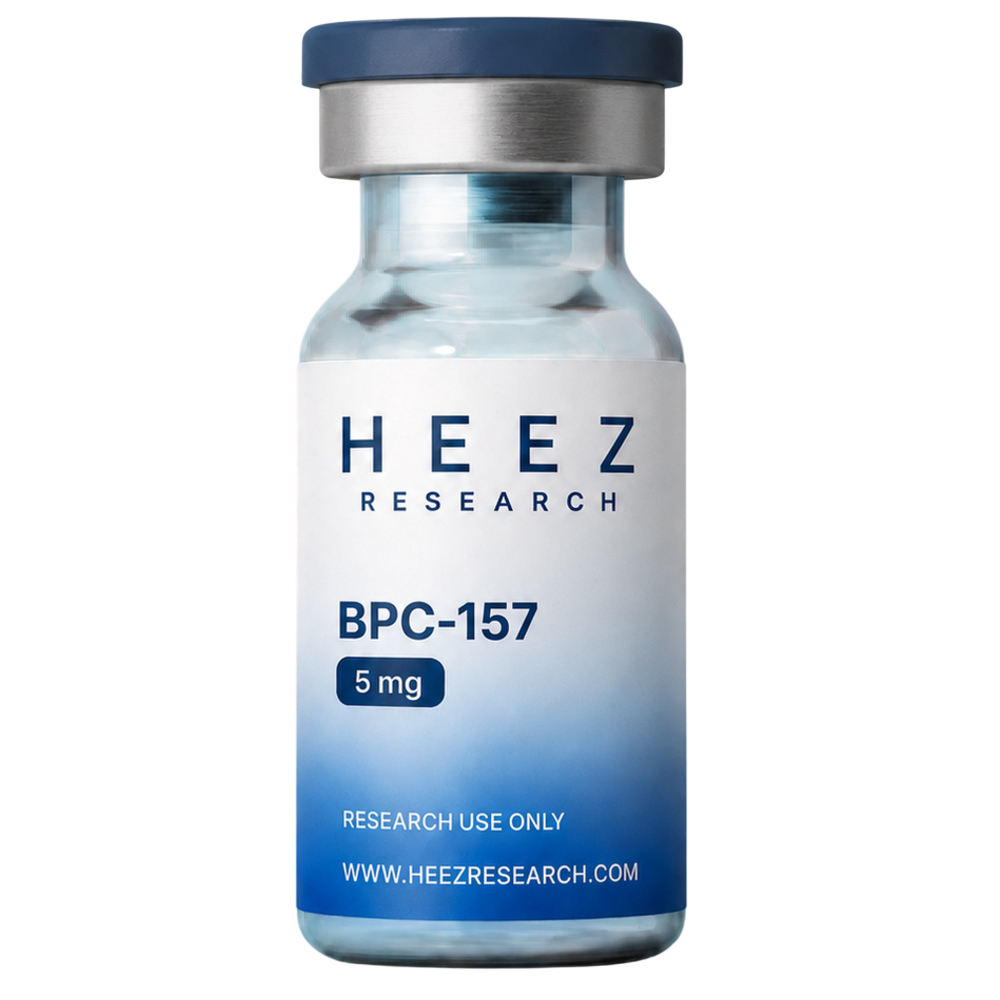
BPC-157 is available at HEEZ Research
This calculator performs arithmetic on the numbers you enter. It is not medical advice, does not tell you what dose to take, and is not a substitute for guidance from a qualified clinician.
BPC-157 shows up in the research supply chain in two very different forms: a lyophilized powder meant for reconstitution and injection, and a capsule meant to be swallowed. The two aren't interchangeable, and neither is the math behind them. Injectable BPC-157 dosage research works from a concentration — mass divided by water volume — while oral BPC-157 dosage research works from a fixed label amount per capsule. This guide lines up how each is calculated and why route of administration is a real variable, not just a preference. It is written for research and educational purposes only and is not medical advice.
Two different products, two different math problems
Injectable BPC-157 arrives as a vial of freeze-dried powder with no volume of its own. It has to be mixed with bacteriostatic water before it can be measured, and the amount of water determines the concentration — which in turn determines how many syringe units correspond to a given dose. Oral BPC-157 arrives as a capsule that already contains a fixed, labeled amount of peptide. There's no mixing step and no concentration to solve for. The entire calculation is capsule count times labeled amount per capsule.
That difference is why a single BPC-157 dosage figure in mcg doesn't translate cleanly between the two forms. A number that means "draw this many units from this concentration" for the injectable form has no equivalent unit-reading step on the oral side. Even the vial-versus-capsule packaging reflects the difference: injectable BPC-157 ships as a dry, lyophilized powder specifically because that form is stable and needs no concentration until the researcher sets one by adding water, while an oral capsule is manufactured to a fixed potency once, at the point of production.
Injectable BPC-157: concentration and syringe units
The injectable math follows the same formula used across every reconstituted peptide on this site: concentration equals vial mass divided by water volume, and syringe units equal that volume in mL multiplied by 100 on a U-100 insulin syringe.
Worked example. A 5 mg (5,000 mcg) BPC-157 vial mixed with 2 mL of bacteriostatic water gives a concentration of 5,000 ÷ 2 = 2,500 mcg/mL. A 250 mcg dose at that concentration is 250 ÷ 2,500 = 0.1 mL, or 0.1 × 100 = 10 units on a U-100 syringe. Change the water volume and the unit count changes with it — the BPC-157 dosage calculator guide walks through additional vial sizes and reference concentrations.
Oral BPC-157: capsule-label math
Oral products skip concentration entirely. A capsule is labeled with a fixed peptide amount — for illustration, a capsule labeled 250 mcg per capsule — and the dose is just arithmetic on capsule count.
Worked example. Two capsules labeled 250 mcg each is 2 × 250 = 500 mcg total. Four capsules is 4 × 250 = 1,000 mcg, or 1 mg (1 mg = 1,000 mcg). There's no water volume, no syringe, and no concentration to solve for — the label amount is fixed at manufacture, not adjustable the way a reconstituted vial's concentration is.
Because oral products vary by manufacturer in how many mcg or mg each capsule actually contains, the number on a specific label is the only number that applies to that product. It isn't something a general calculator can derive the way it derives injectable concentration from vial size and water volume.
Why route is a real variable, not just a preference
Peptides are short chains of amino acids linked by peptide bonds. The digestive tract exists to break exactly that kind of bond apart — stomach acid and digestive enzymes are built to degrade proteins and peptides into their component amino acids before absorption. Injectable administration delivers the peptide directly into tissue, bypassing that digestive breakdown. Oral administration does not bypass it. That's a basic and well-established feature of how digestion works, not a claim specific to BPC-157.
What isn't well established, at least in published human research, is exactly how much intact BPC-157 an oral dose delivers relative to an injected one, or whether a given oral mcg amount and a given injected mcg amount produce comparable results. Treating an oral-label dose and an injectable dose as directly interchangeable in mcg terms isn't something the current research supports either way — the honest position is that route changes what reaches circulation, and the size of that difference for BPC-157 specifically isn't settled by the available published research.
This is exactly the kind of gap where it's more accurate to say the research is thin than to fill it with a number. A head-to-head human comparison of oral versus injectable BPC-157, using matched doses and measuring what actually reaches circulation, is not something the current published literature settles either way. Anyone comparing the two routes should treat that as an open question, not a solved one.
Regulatory and research status
Neither oral nor injectable BPC-157 has an FDA-approved formulation for any human indication. Both are supplied and studied strictly as research compounds, regardless of route. That shared regulatory status doesn't resolve the route question above — it just means neither form has cleared the trial process required for an approved drug label.
Common mistakes
- Converting an oral capsule dose into "equivalent" syringe units. The two forms aren't on the same measurement system, and there's no verified conversion factor between an oral mcg and an injected mcg for BPC-157.
- Assuming every oral BPC-157 capsule contains the same labeled amount. It varies by manufacturer. Read the specific product's label rather than reusing a number from a different one.
- Running oral capsule-count math through the reconstitution calculator. The calculator solves concentration and syringe units for a mixed vial — it has nothing to compute for a fixed-dose capsule.
- Treating "oral" and "injectable" as a potency comparison. The available research doesn't establish a mcg-for-mcg equivalence between the two routes, so neither should be described as simply a stronger or weaker version of the other.
Related
For the full injectable reconstitution walkthrough, including additional vial sizes, see the BPC-157 dosage calculator guide. To work out concentration and syringe units for your own vial and water volume, enter them directly into the free peptide calculator.
Frequently Asked Questions
- Is oral BPC-157 dosed the same way as injectable BPC-157?
- No. Injectable BPC-157 is reconstituted from lyophilized powder into a liquid concentration and measured in syringe units. Oral BPC-157 is sold in capsules with a fixed mcg or mg amount printed on the label, so the dose is simply the number of capsules taken, with no reconstitution step involved.
- Does route of administration change how much BPC-157 reaches circulation?
- Route matters for any peptide. Peptides are chains of amino acids held together by peptide bonds, and the digestive tract is built to break those bonds down with stomach acid and enzymes before absorption. Injectable administration bypasses that digestive process; oral administration does not. Comparative human data on how this plays out specifically for BPC-157 is limited.
- Can the peptide calculator work out an oral BPC-157 dose?
- The calculator is built for reconstitution math — vial size, water volume, and syringe units for injectable use. Oral capsule dosing has no concentration or draw volume to calculate; it's a fixed label amount multiplied by capsule count, so the reconstitution calculator doesn't apply to it.
- Is BPC-157 FDA-approved in either oral or injectable form?
- No. BPC-157 has no FDA-approved formulation for any route of administration or human indication. Both oral and injectable versions are sold and studied strictly as research compounds.
Ready to calculate? Use the free peptide reconstitution calculator →