BPC-157 Dosage Calculator: Reconstitution & Syringe Units
By PeptCalc Research — Medically reviewed by David Mansour, MD — Last reviewed July 8, 2026
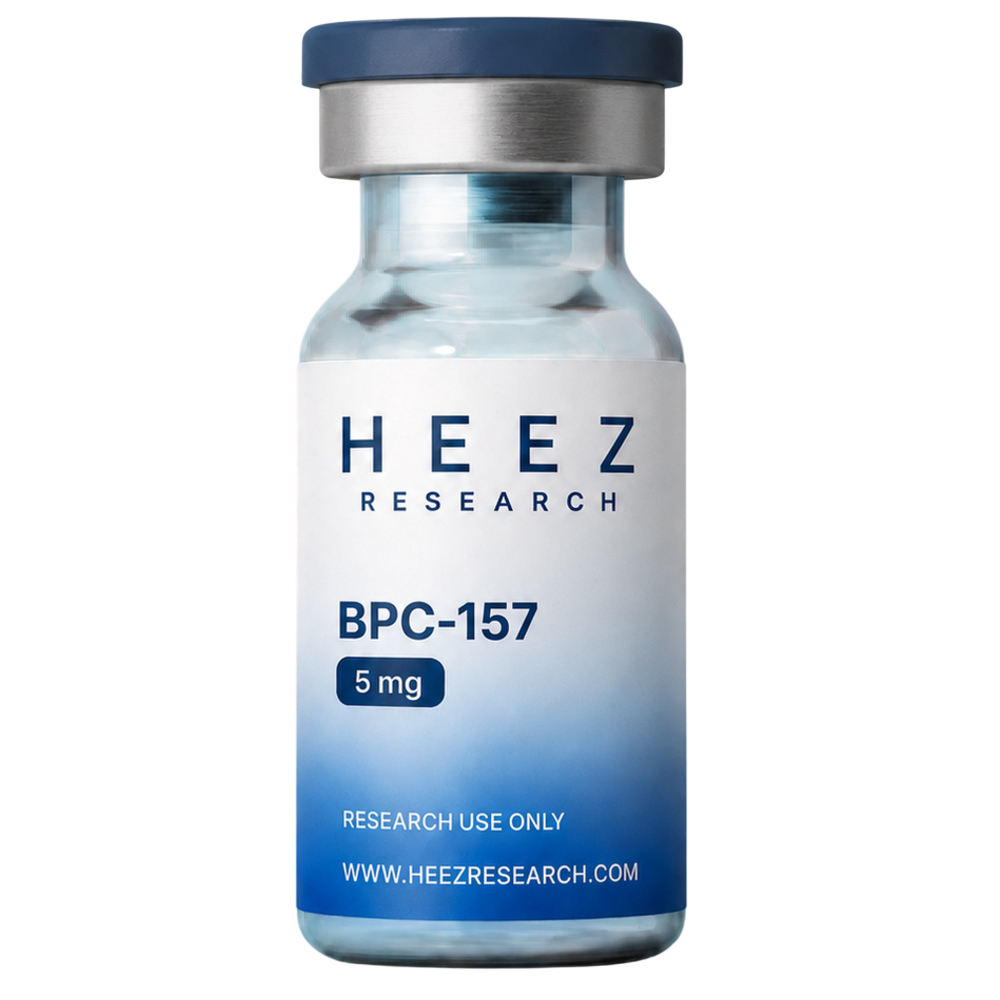
BPC-157 is available at HEEZ Research
This calculator performs arithmetic on the numbers you enter. It is not medical advice, does not tell you what dose to take, and is not a substitute for guidance from a qualified clinician.
This is a research reference for the reconstitution math behind BPC-157 (Body Protection Compound-157). It covers how the vial size and water volume set your concentration, and how to convert a target dose into exact insulin-syringe units. For research and educational purposes only — not medical advice.
The one formula you need
BPC-157 vials are labeled in milligrams; research doses are usually described in micrograms (1 mg = 1000 mcg). Concentration is mass ÷ water volume, then units come from the U-100 syringe scale (1 mL = 100 units).
Worked examples
5 mg vial + 2 mL BAC water → 2500 mcg/mL
- mcg per unit: 2500 ÷ 100 = 25 mcg/unit
- 250 mcg dose → 250 ÷ 25 = 10 units
- 500 mcg dose → 20 units
10 mg vial + 2 mL BAC water → 5000 mcg/mL
- mcg per unit: 5000 ÷ 100 = 50 mcg/unit
- 250 mcg dose → 5 units
- 500 mcg dose → 10 units
Notice the same 250 mcg dose is 10 units at one concentration and 5 units at another — which is exactly why the water volume matters. Drop your exact numbers into the peptide reconstitution calculator to skip the arithmetic, and use reverse mode to pick a water volume that lands your dose on a clean mark.
Choosing a water volume
- More water (e.g. 3 mL) → lower concentration → larger, easier-to-read draws
- Less water (e.g. 1 mL) → higher concentration → smaller draws, less room for error
For a 5 mg vial, 2 mL is a common middle ground that keeps typical research doses in the 5–20 unit range.
Handling and storage
BPC-157 ships as a lyophilized powder for stability. After reconstitution it is generally refrigerated and protected from light. Swirl rather than shake, and inject the bacteriostatic water gently down the vial wall.
Related
Frequently Asked Questions
- How many units is a 250 mcg BPC-157 dose?
- With a 5 mg BPC-157 vial reconstituted in 2 mL of bacteriostatic water (2500 mcg/mL), a 250 mcg dose is 10 units on a U-100 insulin syringe. With a 10 mg vial in 2 mL (5000 mcg/mL), the same 250 mcg dose is 5 units.
- How much bacteriostatic water for a 5 mg BPC-157 vial?
- A common research setup is 2 mL of bacteriostatic water per 5 mg vial, giving 2500 mcg/mL. Adding more water lowers the concentration and increases the number of units per draw.
- Can BPC-157 and TB-500 be drawn into the same syringe?
- They are sometimes drawn together for a single injection in research settings, but they should not be reconstituted in the same vial. Compatibility and stability vary, so this is a per-protocol decision.
Ready to calculate? Use the free peptide reconstitution calculator →