Retatrutide vs Tirzepatide: Mechanism and Dosing Compared
By PeptCalc Research — Medically reviewed by David Mansour, MD — Last reviewed August 4, 2026
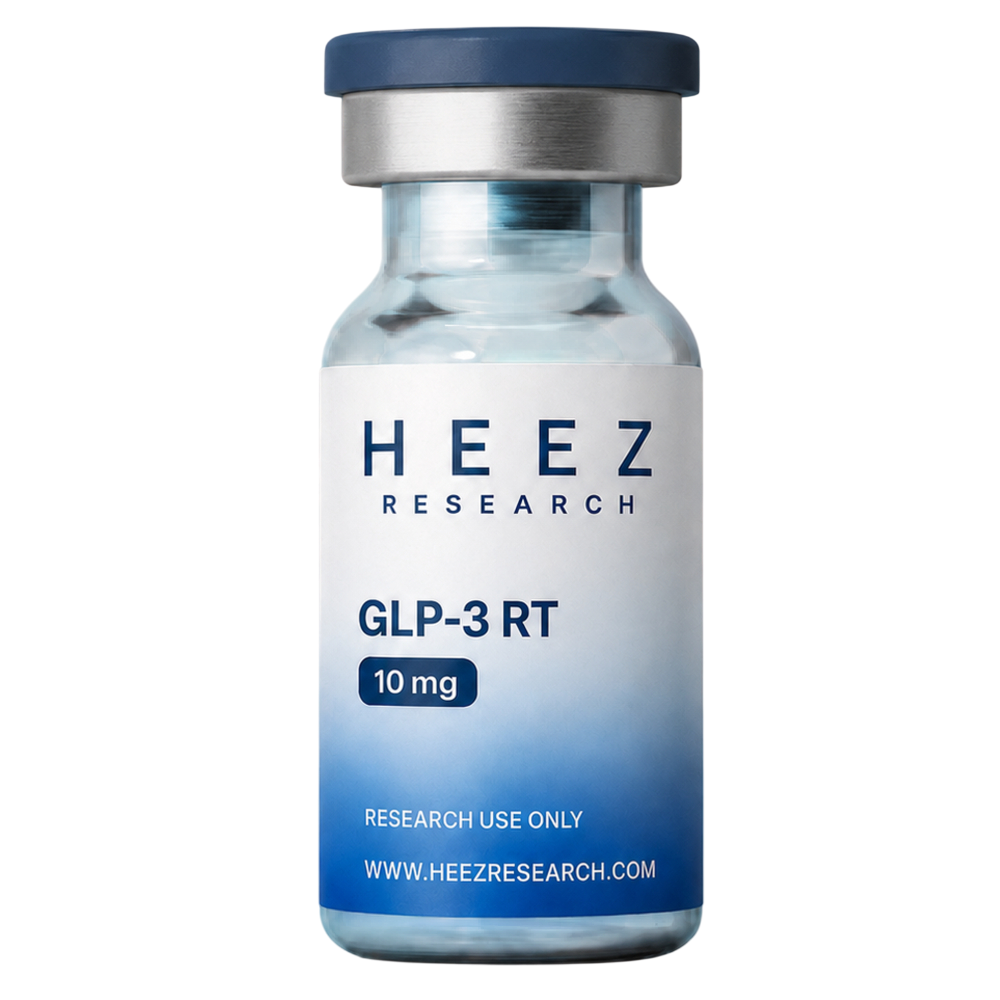
Retatrutide is available at HEEZ Research
This calculator performs arithmetic on the numbers you enter. It is not medical advice, does not tell you what dose to take, and is not a substitute for guidance from a qualified clinician.
Retatrutide and tirzepatide get compared constantly because they sit in the same research family — both are multi-receptor metabolic agonists, both ship as lyophilized powder, and both have to be reconstituted before a dose can be measured into a syringe. They are not the same compound at different strengths. They act on a different number of receptors, carry a different regulatory status, and rest on a different depth of evidence. This reference lines up what's different between retatrutide and tirzepatide and what stays the same in the reconstitution math. It is written for research and educational purposes only and is not medical advice.
What separates retatrutide and tirzepatide
The difference is mechanism, not potency. Tirzepatide is a dual agonist, acting on both the GLP-1 receptor and the GIP receptor. Retatrutide goes a step further as a triple agonist, acting on GLP-1, GIP, and glucagon receptors. That third target — the glucagon receptor — is the single mechanistic distinction between the two compounds. It does not automatically make retatrutide a stronger or safer option; it means retatrutide engages a metabolic pathway tirzepatide does not touch, studied on a shorter timeline with a thinner evidence base behind it.
Because retatrutide adds a receptor rather than replacing one, the two are frequently discussed side by side in research contexts rather than as one simply superseding the other. Confirming which compound is actually in a given vial — rather than assuming from the supplier's marketing language — matters more here than with most peptide pairs, since a mislabeled vial changes which receptor pathway the research protocol is actually engaging.
Regulatory and research status
Tirzepatide has an FDA-approved pharmaceutical formulation, prescribed under specific brand names for specific approved indications. Retatrutide has no approved formulation and is still moving through clinical trials as an investigational compound. That gap is one of the clearest signals of how much human data stands behind each: approval requires a body of trial evidence that retatrutide, as an investigational compound, has not yet accumulated. Neither is discussed here as something to take — this article covers the underlying chemistry and reconstitution arithmetic, not a use recommendation.
Vial sizes and typical concentrations
Research suppliers list these two compounds in different vial sizes, and each has its own commonly cited reference concentration:
| Peptide | Typical vial sizes | Common reference concentration |
|---|---|---|
| Tirzepatide | 5 mg, 10 mg, 15 mg, 30 mg, 60 mg | 10 mg/mL (1 mL water per 10 mg) |
| Retatrutide | 10 mg, 15 mg, 20 mg, 30 mg | 10 mg/mL (1 mL water per 10 mg) |
Both compounds share the same 10 mg/mL reference point, which is a coincidence of what lands common research doses on clean syringe marks — not a rule the arithmetic requires. Any vial size can be reconstituted with any water volume; the peptide calculator recalculates the resulting concentration and units for whatever combination you actually enter.
Worked example: same formula, two different numbers
The formula behind both is unchanged regardless of which compound, or receptor count, is in the vial: concentration equals mass divided by water volume, and syringe units equal that volume in mL multiplied by 100 on a U-100 syringe.
Tirzepatide. A 10 mg vial with 1 mL of bacteriostatic water is 10 ÷ 1 = 10 mg/mL. A 5 mg dose is 5 ÷ 10 = 0.5 mL, or 0.5 × 100 = 50 units.
Retatrutide. A 20 mg vial with 2 mL of bacteriostatic water is also 20 ÷ 2 = 10 mg/mL. A 4 mg dose is 4 ÷ 10 = 0.4 mL, or 0.4 × 100 = 40 units.
Two different compounds, two different dose sizes, and the same two-step calculation: divide mass by water for concentration, multiply the resulting volume by 100 for units.
Why one calculator covers both
Here's how we see it: the step where a research dose actually goes wrong isn't the injection, it's the reconstitution math. A U-100 insulin syringe measures a fixed 100 units per mL, so the mg-per-unit depends entirely on how much water went into the vial — and that holds whether the vial contains a dual agonist or a triple agonist. Mix up that ratio for either compound and every draw after is off by the same wrong factor. That's why a single reconstitution calculator built on the mass-divided-by-volume formula handles both without modification. For the full mixing walkthrough, see how to reconstitute peptides.
Where the comparison breaks down
The math is interchangeable; the compounds are not. Tirzepatide's approval status means it has an established, regulator-reviewed body of evidence behind it. Retatrutide's investigational status means its research dosage reference points are newer, less standardized, and worth treating as a starting point to verify rather than a settled figure. Applying a reconstitution concentration that's well established for tirzepatide to a retatrutide vial isn't wrong on the arithmetic — the formula doesn't care which compound it's applied to — but it borrows a level of precedent that retatrutide's shorter research history hasn't actually earned yet. For the full breakdown of where retatrutide's numbers currently stand, see the retatrutide dosage chart.
Common mistakes
- Treating "triple agonist" as simply stronger. Retatrutide's third receptor target changes which pathway is engaged, not how potent the compound is milligram for milligram.
- Assuming retatrutide's evidence base matches tirzepatide's. It doesn't — tirzepatide has an approved formulation behind it; retatrutide remains investigational.
- Confusing mg and mcg. Both compounds are typically labeled in milligrams. 1 mg equals 1,000 mcg, and reading one for the other produces a 1,000x error.
- Assuming a vial's reference concentration without checking the label. 10 mg/mL is common for both, but not universal — confirm the actual vial size and water volume used before drawing.
- Shaking the vial. Swirl gently instead — shaking risks degrading the peptide.
Related
For the compound-specific math, see the tirzepatide reconstitution calculator and the retatrutide dosage chart guides. Or enter your own vial size, water volume, and target dose directly into the peptide dosage calculator to see the exact syringe units for either compound.
Frequently Asked Questions
- Do retatrutide and tirzepatide work the same way?
- No. Tirzepatide is a dual agonist that acts on the GLP-1 and GIP receptors. Retatrutide adds a third target, acting on GLP-1, GIP, and glucagon receptors. The extra receptor is the entire mechanistic difference between the two — it is not a difference in strength, it is a difference in how many hormone pathways each compound engages.
- Is tirzepatide FDA-approved, and is retatrutide?
- Tirzepatide has an FDA-approved pharmaceutical formulation for specific indications. Retatrutide has no approved formulation and remains an investigational compound moving through clinical trials, which is why the research and dosing reference points behind it are far less settled than tirzepatide's.
- Do retatrutide and tirzepatide use the same reconstitution formula?
- Yes. Concentration equals peptide mass divided by water volume for both, and syringe units equal that volume in mL times 100 on a U-100 insulin syringe. The formula does not change based on which compound is in the vial — only the typical vial sizes and reference concentrations differ.
- Can one calculator handle both retatrutide and tirzepatide?
- Yes. The reconstitution math is identical for any lyophilized peptide. Enter the vial size, water volume, and target dose for either compound into the same calculator and it returns the exact units for that specific vial.
Ready to calculate? Use the free peptide reconstitution calculator →